Padenghe sul Garda is the village I write from. My family has owned a small house just outside the centre since the seventies — my grandfather bought it before the autostrada really put the lake on the map — and I spend roughly a third of the year there now, slipping in from Milano on Friday afternoons and slipping out again on Mondays at dawn. Padenghe sits on the western, Brescian side of the lake — between Desenzano in the south and Salò further north — and almost nobody on the lake bothers to stop here. It has no train station of its own, no famous beach, no Roman ruins, no celebrity restaurant. What it has is olive trees, a castle, two old churches, and a population of around four thousand five hundred people who are largely uninterested in tourism. For me this is a feature, not a bug.
This piece is what I would tell a friend who asked how to spend a slow day in Padenghe — meaning a day where you don't try to see anything in particular, and instead let the village do its thing around you. There is a castle to see, yes; there is an oil mill worth a visit; there is a small parish church most people miss. But the real point of Padenghe is that nothing here demands your attention. You give it your attention voluntarily, or you don't, and either way the afternoon passes pleasantly.
Where Padenghe sits
Padenghe sul Garda is on the SS572, the main road that runs along the western shore between Desenzano and Salò. By car it's twelve minutes north of Desenzano, eight minutes south of Manerba, and a comfortable hour from Milano on a quiet morning. There is a small bus service (line LN026 from Desenzano station, run by Arriva) but the schedule is sparse and most visitors arrive by car. Population around four and a half thousand, much of it scattered across the slope rather than concentrated in a centre. The historic core, such as it is, sits on a low hill above the lake, with olive groves on every side and a small harbour below.
You don't come to Padenghe for sights. You come for olive oil, a long walk along the lake to the next village, lunch at a trattoria where the owner remembers you from last summer, and an afternoon of doing nothing on a terrace.
The castle and the parish church
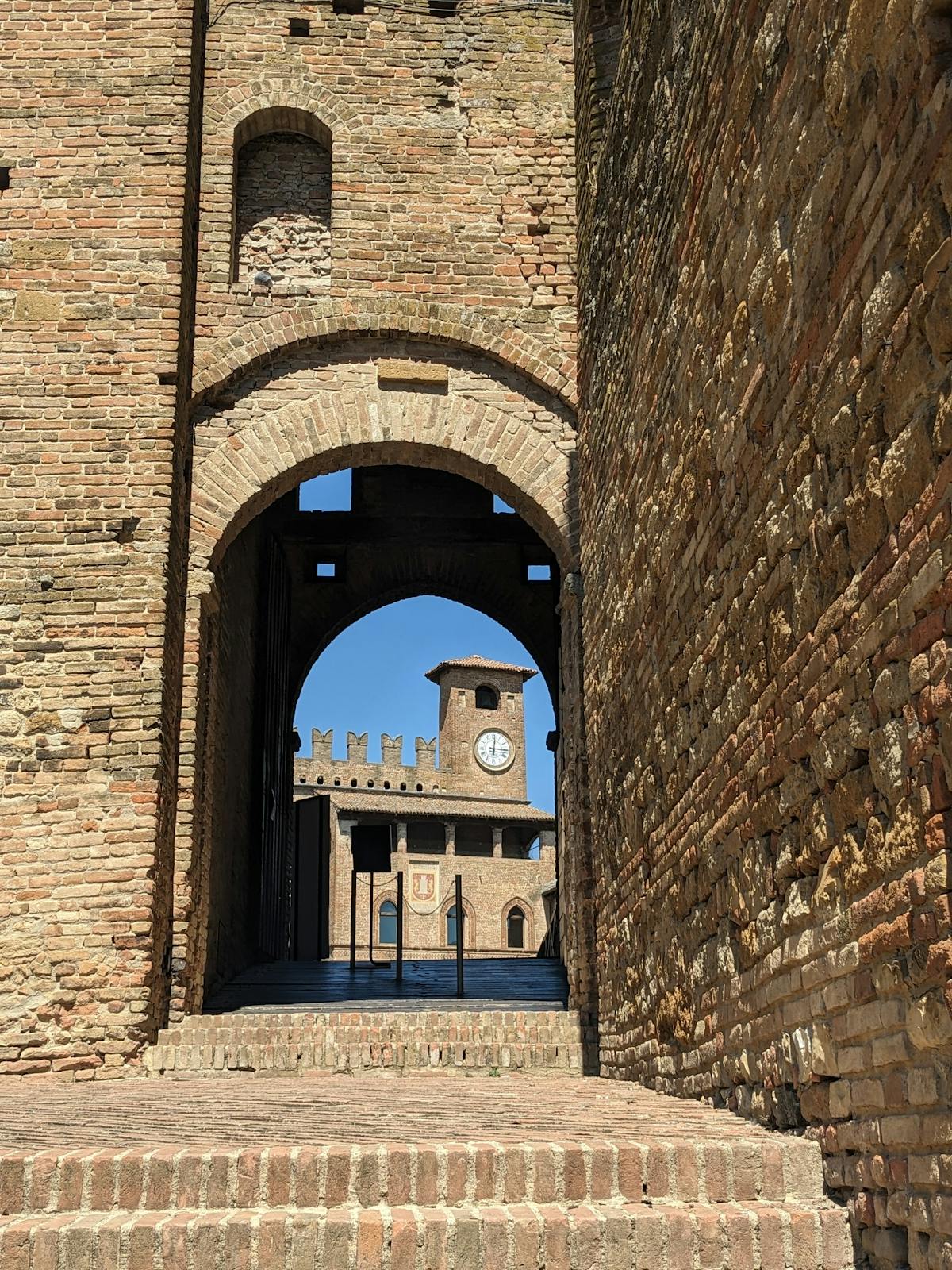
Padenghe's castle, the Castello di Padenghe, is a tenth- to eleventh-century fortified hilltop village, with much of its original wall still standing. It is unusual among Lake Garda castles in that people still live inside it — small houses occupy what was once the inner enclosure. You can walk through the gateway, around the inner courtyards and along part of the walls; there's no admission fee for the public sections, though opening varies and the privately-occupied portions are obviously off-limits. From the rampart on the north side you get one of the better views over the southern lake, all the way across to Sirmione's silhouette in the haze.
A few minutes outside town, on a quiet country road through the olive groves, is the Pieve di Sant'Emiliano. A small Romanesque parish church from the twelfth century, still consecrated, often empty. It is one of those places that does not appear in any guidebook I've ever read but that people who live around here visit on Sunday mornings, in winter, when the rest of the lake is shut. The interior is plain — bare stone, simple wooden pews, a single fresco on the south wall — and that plainness is the point. Open hours are unpredictable; if it's locked when you arrive, the parish house next door usually has someone with a key.
Olive groves and the oil mills
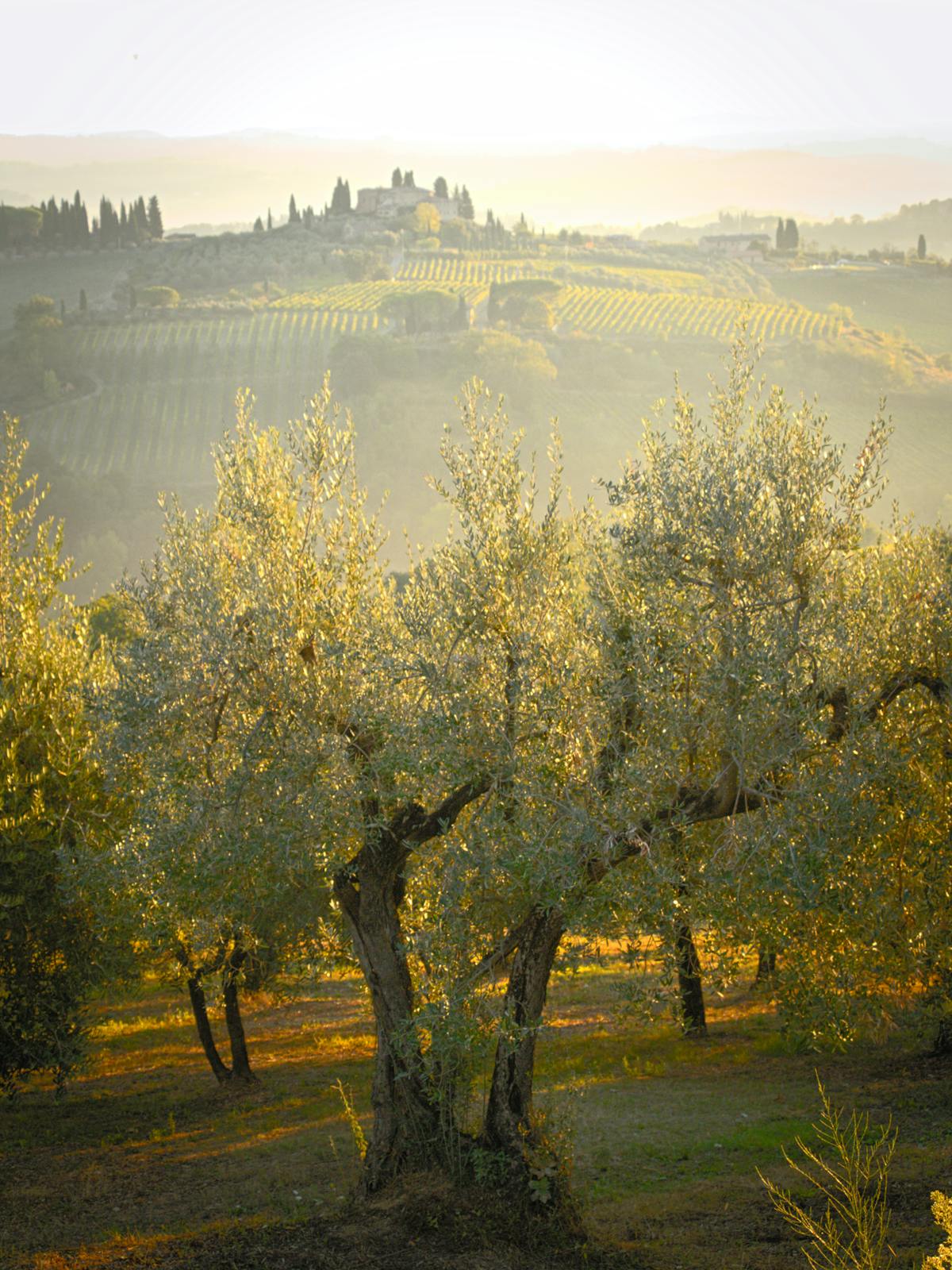
The slopes around Padenghe are planted with olive trees — Casaliva and Leccino mostly, the local cultivars — and the village is one of the best places on the lake for an actual olive oil tasting. Two mills do this. Frantoio Manestrini runs scheduled tastings by appointment; you book a few days ahead, arrive at the mill, and a member of the family walks you through the press, the cellar, and a comparative tasting of three or four oils. La Riserva di Padenghe is smaller and more informal, with a shop attached to the mill and oils available to taste at the counter.
Practical: Frantoio Manestrini
Tastings by appointment, generally morning or late afternoon, around an hour, often free or a small charge with a bottle credited against any purchase. Book a few days ahead via frantoiomanestrini.com. The mill is on Via Avis, just outside the village. Their late-November pressing weeks are particularly good, with new oil straight from the centrifuge.
If you want to walk between the groves yourself, take the small road north out of the centre, past the cemetery, and follow it uphill for fifteen minutes. You end up at a junction with views back across the lake and three or four small private olive plots on either side. In late November and early December — pressing season — the smell along this stretch is something close to extraordinary.
The lakeside path to Moniga
Down at the harbour, where the locals dock their boats, a small lakeside path runs north along the water to the next village, Moniga del Garda. Thirty minutes on foot at a slow pace, twenty if you don't stop. The path is flat, partly under olive trees, partly along the open shore. There are two or three small beaches with limestone pebbles, often empty in the off-season. Moniga itself is the next village along: a small medieval centre, a couple of cafés, a fishing harbour. The walk back, with the lake on your right and the western hills behind, is one of my favourite half-hours on the lake.
Walking on, past Moniga, you eventually reach Manerba and the long beach beneath the Rocca. That's a longer day — closer to two hours each way — and one I save for spring weekends when the wildflowers are out in the meadows above the path.
A slow day, hour by hour
Here is what a slow Padenghe day looks like, end to end. I have done versions of this dozens of times, often with friends visiting from out of town, and it has yet to disappoint anyone.
- 9:00 — Coffee at the village café. Bar Centrale on the main piazza, a brioche and an espresso, the morning paper if it's still there.
- 9:45 — Castle walk. Up the hill, through the gate, along the wall on the north side. Twenty minutes is enough. View over the lake, view over the olive groves, then back down.
- 10:30 — Pieve di Sant'Emiliano. A short drive or twenty-minute walk through the groves to the parish church. Ten minutes inside, longer if you sit.
- 11:30 — Olive oil tasting at Frantoio Manestrini. Booked the day before. An hour with the family, three or four oils, a bottle to take home.
- 13:00 — Lunch. Trattoria Aurora in the centre, or one of the lakeside restaurants below the village. Lake fish, polenta, a glass of Lugana, a coffee at the end.
- 15:30 — Lakeside walk to Moniga. Half an hour each way, with a stop somewhere in between for a glass of wine.
- 17:30 — Reading on the terrace. Or, if it's December, by the fire in the family kitchen. This part is non-negotiable.
For more on the oil mills and the local extra-virgin scene, see my south Garda olive oil entry. For a contrast across the water, the Sirmione old-town walk covers the obvious eastern-shore comparison. And for when each month actually feels like in Padenghe and around, my month-by-month read is the practical answer to "when should we come?"
Useful pages: comune.padenghe.bs.it for the village's own opening hours and event listings; frantoiomanestrini.com for olive oil tastings; visitgarda.com for general orientation; and Slow Food Italia for the wider Brescian and Garda food picture.